
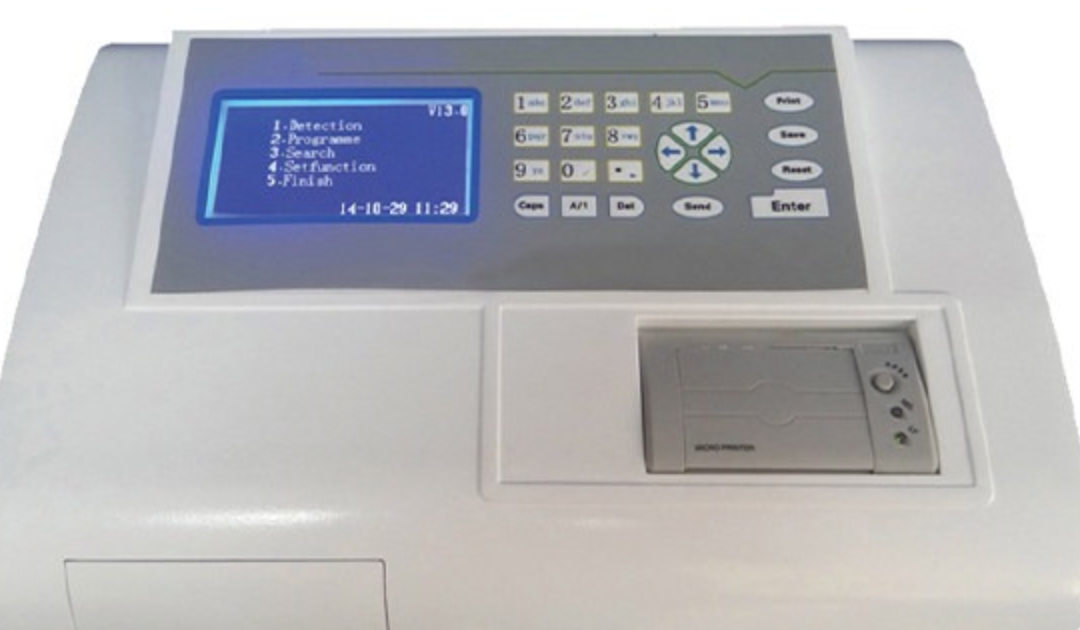
Choosing an ELISA reader can feel overwhelming when you first begin comparing models. You want accuracy, dependability, and a system that fits your workflow without adding extra steps. If you’ve ever wondered how to choose an ELISA reader for lab environments that require precision and efficiency, this guide walks you through everything you need to know.
You’re not just buying an instrument. You’re investing in reliable results, faster turnaround, and smooth day-to-day operation. Because when your ELISA results guide clinical decisions, every detail matters. By the end of this blog, you’ll know exactly what to look for and which features will serve your team best.
Understanding What an ELISA Reader Actually Does
An ELISA reader measures the optical density (OD) of each microwell in a microplate after the colorimetric reaction takes place. This reading determines how much antigen or antibody is present in your sample. The stronger the absorbance, the higher the analyte concentration.
Any system you choose should provide accurate photometric measurement and stable wavelength performance. Without these, your results can drift or become inconsistent across runs. That is why understanding how to choose an ELISA reader for lab accuracy starts with knowing the role optics play in your final results.
Key Features to Look For When Choosing an ELISA Reader
When considering how to choose an ELISA reader for lab workflows, you want to pay attention to a few essential features. Start with wavelength range. Most ELISA assays require readings at 450 nm, but your lab may need 630 nm or 405 nm for reference or secondary wavelengths.
The next feature is plate compatibility. Some readers only support 96-well plates, while others accommodate different well formats or microstrips. If you process partial plates or microstrips, the Stat Fax 4700 ELISA Microstrip Reader offered by NE LabSystems is a reliable option built for flexible clinical use.
Reaction time, read speed, and software functions also matter. You want an interface that is intuitive and supports curve fitting, blank subtraction, and data export. These features make routine assays faster and reduce manual calculation errors.
Matching the Reader to Your Workflow
It’s important to choose an ELISA reader that fits the size and pace of your lab. High-throughput labs may need rapid plate reading with minimal warm-up time. Smaller labs may prioritize ease of use and maintenance over speed.
Think about who will operate the device. If multiple team members use it, a straightforward interface will prevent mistakes. Labs with ongoing assay development may benefit from programmable protocols that can be saved and reused.
If you want consistent results without the hassle of complicated menus, choosing equipment through NE LabSystems gives you access to models designed for smooth operation, dependable accuracy, and long-term support.
Why Your Supplier Matters as Much as Your Equipment
Even the best ELISA reader needs good support. Calibration, servicing, and troubleshooting are part of long-term ownership. Working with a trusted supplier ensures you receive not only the right device, but also the guidance needed to keep it performing well for years.
NE LabSystems provides extended warranties, responsive technical help, and equipment selected for real-world laboratory needs. When learning how to choose an ELISA reader for lab performance, knowing you have reliable support removes pressure from your team and helps maintain consistent operations.
Final Thoughts
Knowing how to choose an ELISA reader for lab accuracy gives you a major advantage. When you select a system built for precision, simplicity, and everyday reliability, your team gains time, confidence, and consistent outcomes.
Ready to equip your lab with a dependable ELISA reader? Explore high-quality options at NE LabSystems and find the model that supports the way your lab works.