
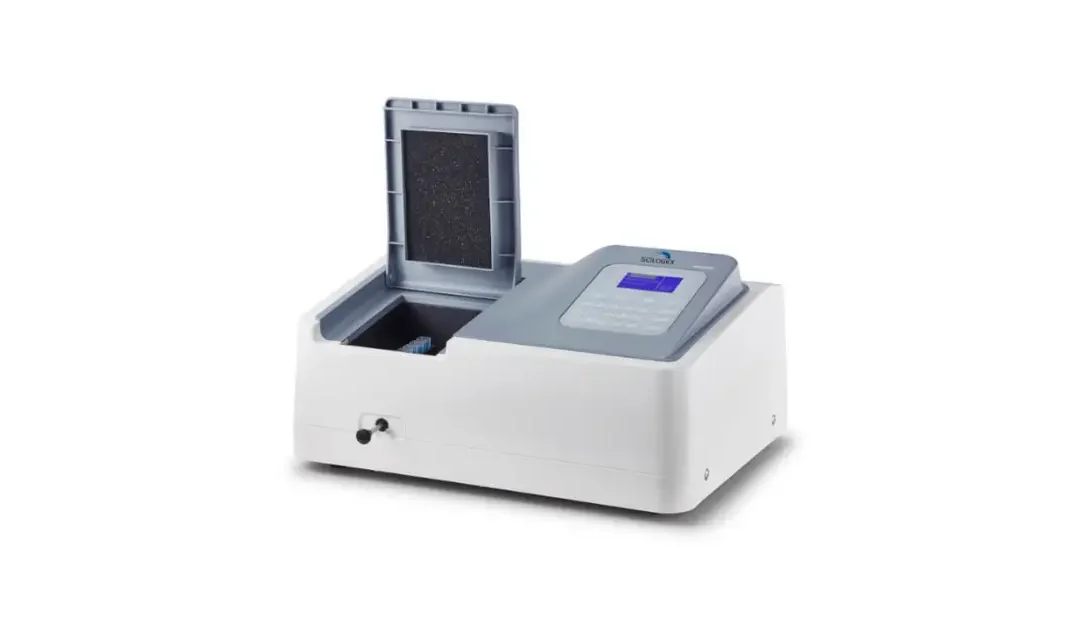
When you work in a laboratory, accuracy is everything. A spectrophotometer is designed to measure how much light a sample absorbs at a specific wavelength. These measurements help you analyze proteins, DNA, chemical concentrations, and many other biological and chemical compounds.
However, even the most advanced instruments require regular calibration. Over time, optical components shift slightly, environmental conditions change, and repeated use can introduce small measurement errors. That is why learning how to calibrate a spectrophotometer is essential if you want reliable and reproducible results.
Proper calibration ensures that the absorbance readings you obtain truly represent your sample. Without it, even small inaccuracies can lead to incorrect conclusions in experiments or diagnostic testing.
Preparing Your Spectrophotometer for Calibration
Before you begin the calibration process, you want to make sure the instrument is ready for accurate measurements. Start by powering on the spectrophotometer and allowing it to warm up. Most instruments need around fifteen to twenty minutes to stabilize the light source.
Next, check that the cuvette holder and optical path are clean. Dust or residue can interfere with light transmission and distort readings. You should also inspect the cuvettes you plan to use. They must be clean, scratch-free, and suitable for the wavelength range of your experiment.
Many laboratories use advanced instruments like the SCI-UV series spectrophotometers supplied by NE LabSystems. These systems are designed for precision measurements and include digital controls that make calibration more straightforward.
Once the instrument is warmed up and clean, you can move to the actual calibration process.
The Step-by-Step Calibration Process
The first step when learning how to calibrate a spectrophotometer is setting the baseline measurement. This is usually done using a blank solution. The blank contains the solvent used in your samples but none of the analyte you are measuring.
Insert the blank cuvette into the instrument and close the lid. The spectrophotometer measures how much light passes through the blank solution. You then set the absorbance value to zero or the transmittance to 100 percent, depending on the instrument settings.
This baseline establishes a reference point for all future measurements.
Next, you may verify wavelength accuracy. Many laboratories use standard calibration filters or reference solutions with known absorbance peaks. By scanning these standards, you confirm that the instrument detects wavelengths correctly.
If the measured peak differs from the known standard value, the instrument may need adjustment according to the manufacturer’s calibration procedure.
Finally, you test photometric accuracy using certified absorbance standards. These standards contain solutions with precisely known absorbance values. When your instrument measures the standard, the reading should match the expected value within an acceptable tolerance.
If the results fall outside that tolerance, recalibration or maintenance may be required.
Maintaining Long-Term Measurement Accuracy
Once you understand how to calibrate a spectrophotometer, maintaining consistency becomes part of your routine laboratory workflow. Calibration should be performed regularly, especially before critical experiments or when you notice unusual readings.
Environmental factors also influence performance. Temperature fluctuations, vibration, and dust can all affect optical instruments. Keeping your spectrophotometer in a stable environment helps preserve measurement reliability.
You should also maintain a calibration log. Recording the date, standards used, and measurement results provides documentation for quality assurance and regulatory compliance. This is particularly important in clinical laboratories and research facilities.
Reliable Instruments Support Reliable Results
Spectrophotometers remain one of the most important analytical tools in modern laboratories. When properly calibrated, they allow you to measure concentrations with confidence and produce reproducible scientific data.
Understanding how to calibrate a spectrophotometer ensures that every measurement you take reflects the true properties of your sample. With proper preparation, accurate standards, and regular maintenance, your instrument will continue delivering dependable results for years.
If you want to equip your laboratory with reliable analytical instruments and expert support, explore the precision laboratory solutions available at NE LabSystems. Their spectrophotometer systems help you maintain accuracy while making calibration and daily operation easier.