
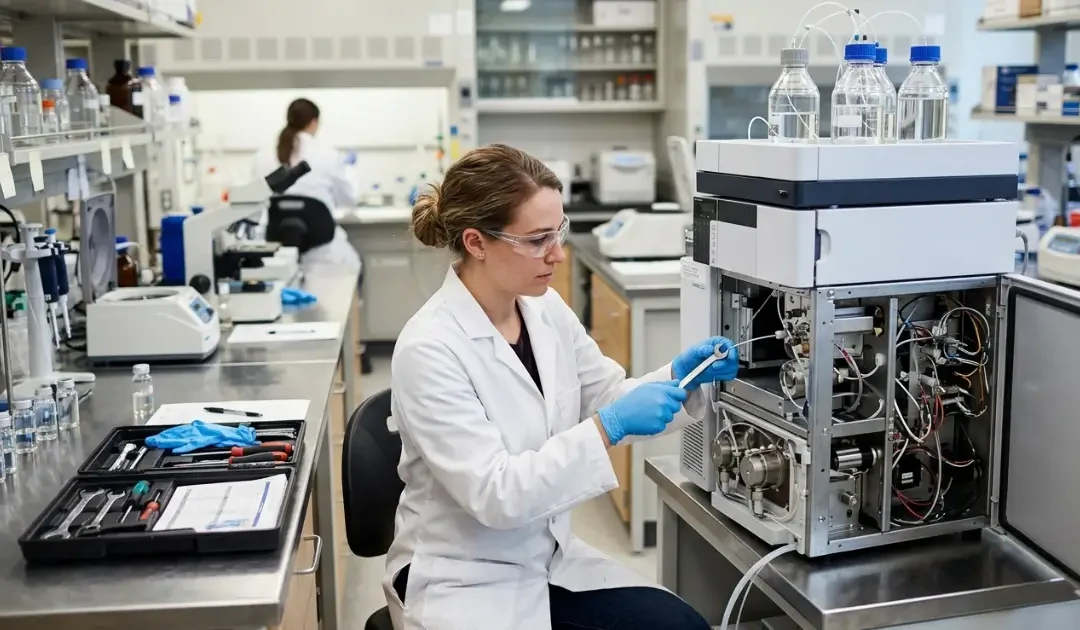
Instruments that fail without warning are expensive in multiple ways simultaneously. The repair or replacement cost is the most obvious. Less visible but often larger is the cumulative cost of lost samples, disrupted workflows, delayed results, emergency service fees, and the staff time consumed by unplanned troubleshooting. Laboratory equipment preventive maintenance replaces this reactive pattern with a proactive one: scheduled inspection, cleaning, calibration verification, and part replacement that catches and corrects problems before they become failures.
This guide covers the principles, structure, and specific tasks that constitute an effective preventive maintenance program for laboratory instruments.
What Preventive Maintenance Includes
According to Lab Equipment Direct’s maintenance documentation, laboratory equipment preventive maintenance best practices include routine cleaning, scheduled calibration, regular inspections, timely part replacements, thorough documentation, and following manufacturer guidelines for each instrument. These activities collectively reduce the likelihood of sudden breakdowns that disrupt workflows and delay results, extend equipment lifespan by addressing wear before it becomes failure, and ensure that instruments operate within their specified performance ranges.
Preventive maintenance is distinct from calibration verification and corrective maintenance. Preventive maintenance is scheduled based on time intervals or usage cycles. Calibration verification confirms that instrument accuracy is within acceptable limits. Corrective maintenance addresses failures after they occur. All three are components of a complete equipment management program, but preventive maintenance is the one that reduces the need for the other two.
Building a Preventive Maintenance Schedule
A PM schedule starts with an inventory of all laboratory instruments, including model number, serial number, installation date, and the manufacturer-recommended maintenance intervals for each. From this inventory, tasks are assigned to daily, weekly, monthly, quarterly, and annual intervals based on manufacturer guidance, usage frequency, and instrument criticality.
Daily tasks are operator-level: visual inspection for damage or abnormal performance, cleaning of work surfaces and sample contact areas, and basic operational checks. Weekly tasks include more thorough cleaning, consumable level checks, and review of error logs. Monthly and quarterly tasks cover component inspections, calibration verification, filter replacements, and lubrication where specified. Annual tasks include comprehensive calibration by a qualified technician, full mechanical inspection, and manufacturer-specified part replacements.
Centrifuge Preventive Maintenance
Centrifuges are mechanically demanding instruments that require specific PM attention. Rotor inspection before each run for cracks, corrosion, or deformation is a safety-critical daily task: a damaged rotor at high speed can fail catastrophically. Cleaning the rotor and centrifuge bowl after each use prevents corrosive buildup from spilled biological material. Speed accuracy verification against a calibrated tachometer should be performed quarterly. Lid lock mechanisms and safety interlock systems require periodic functional testing.
Incubator Preventive Maintenance
Incubators require regular interior cleaning to prevent microbial contamination, particularly CO2 incubators where the warm, humid environment favors fungal and bacterial growth. Temperature accuracy should be verified against a calibrated reference thermometer at least quarterly. CO2 sensor calibration is required monthly or per manufacturer schedule for CO2 incubators. Door seal inspection ensures that the incubator maintains its atmosphere without excessive energy consumption during door-opening recovery.
Water Bath Preventive Maintenance
Water baths accumulate mineral deposits from tap water that coat heating elements and reduce efficiency over time. Regular draining, cleaning with mild acid solution where appropriate, and refilling with distilled or deionized water minimize scale formation. Temperature accuracy verification at the working set point is a routine calibration task. Circulating baths require pump inspection and flow rate verification to confirm that the circulation producing temperature uniformity is functioning as intended.
Spectrophotometer and Analytical Instrument Maintenance
Optical instruments require protection from dust and contamination on optical surfaces. Regular cleaning of sample compartments, cuvette holders, and microplate transport mechanisms prevents optical interference. Lamp life monitoring and proactive replacement before output degrades below specification prevent the gradual result drift that occurs when instruments run on aging lamps. Wavelength calibration verification using certified reference standards and photometric accuracy checks are periodic requirements for regulated laboratory settings.
Documentation: The Evidence of Compliance
Every laboratory equipment preventive maintenance activity requires documentation: the date performed, who performed it, what was done, and the results of any verification measurements. This documentation serves regulatory compliance requirements under GLP, GMP, CLIA, and ISO 17025, provides the maintenance history record that enables trend analysis and early problem identification, and creates the institutional memory that protects laboratory operations during staff changes.
At NE LabSystems, we support the long-term performance of every instrument we sell with free extended warranties on U.S. purchases and factory-trained engineering support. Browse our full laboratory instrument catalog at NE LabSystems or call (877) 733-6838 to discuss preventive maintenance programs for your specific equipment.