
If you run a clinical or research lab, you already know how much rides on your environment. Temperature, humidity, contamination control, every variable matters. But there is one factor that often gets overlooked until it becomes a problem: the air your team breathes every single day.
Air quality monitoring equipment for laboratories is not a luxury add-on. It is a core part of running a responsible, compliant, and high-performing lab.
Why Laboratory Air Quality Is a Serious Compliance Issue
The Occupational Safety and Health Administration (OSHA) enforces workplace air quality through its General Duty Clause, Section 5(a)(1), which requires employers to provide a work environment free from recognized hazards that are likely to cause serious physical harm. Violations can carry fines of up to $16,550 per incident, with willful violations reaching as high as $165,514.
Beyond OSHA, the Environmental Protection Agency (EPA) enforces strict air quality standards under the Clean Air Act, particularly through the National Emission Standards for Hazardous Air Pollutants (NESHAP). For laboratories, compliance with both agencies is non-negotiable.
This means your lab cannot rely on assumptions. You need data. And that data only comes from the right monitoring equipment.
What Are the Key Contaminants in a Lab Environment?
Labs generate a unique mix of airborne hazards that most standard workplaces never face. Understanding what you are dealing with is the first step toward managing it effectively.
Volatile organic compounds (VOCs) are among the most common concerns. According to the EPA, concentrations of many VOCs can be up to 10 times higher indoors than outdoors. In a lab setting, VOCs can come from solvents, reagents, adhesives, and even cleaning agents.
Carbon dioxide (CO2) is another major concern in enclosed lab spaces. Elevated CO2 levels can cause headaches, fatigue, and impaired cognitive performance, which is the last thing you want when precision is everything. Particulate matter (PM2.5 and PM10), chemical fumes, and microbial contaminants round out the list of threats your team may face daily.
NIOSH research has found that inadequate ventilation accounts for 52% of indoor air quality complaints. That statistic alone should tell you how critical it is to have systems in place that can detect problems before your team starts feeling the effects.
How Air Quality Monitoring Equipment For Laboratories Works
Modern monitoring instruments use a range of sensor technologies depending on what they are designed to detect. Electrochemical sensors are widely used for detecting gases like CO, NO2, and SO2. They work by measuring the electrical current produced when a target gas reacts with the sensor’s chemicals. Infrared sensors are particularly effective for CO2 detection, using light absorption principles to provide stable, accurate readings. Optical particle counters use laser beams to detect and size airborne particles in real time, making them ideal for particulate matter monitoring.
The key is selecting the right instrument for your specific lab environment. A facility handling hazardous chemical reagents needs a very different monitoring profile than one focused on biological sample processing.
The Role of Monitoring in Your Compliance Documentation
One of the most practical benefits of running continuous air quality monitoring is the documentation it creates. Regulatory inspections look for evidence that your lab is proactively managing workplace hazards. A real-time monitoring log does exactly that. It shows not just what conditions are like on the day of inspection, but what your air quality has looked like over time.
OSHA’s standard 29 CFR 1910.1450 regulates occupational exposure to hazardous chemicals in laboratories and places specific emphasis on implementing appropriate controls. Monitoring data helps you demonstrate that your controls are working, and flags when they are not.
How the Right Lab Equipment Supports a Safer Environment
Good air quality monitoring works hand-in-hand with the rest of your lab setup. Your incubators, centrifuges, and analytical instruments all contribute to the conditions inside your lab. Equipment that is well-maintained and properly sealed reduces the chance of leaks, aerosols, and chemical off-gassing that add to your air quality burden.
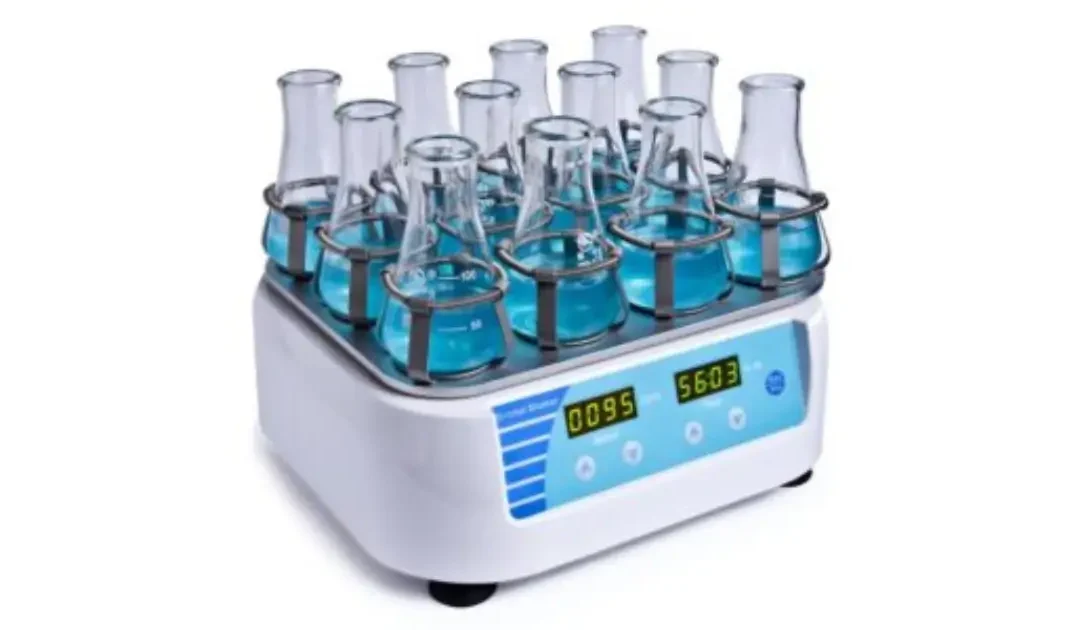
At NE LabSystems, we understand this interconnection. Take the SCILOGEX SCI-O180-Pro Orbital LCD Digital Shaker as a strong example. This unit features a brushless DC motor, which significantly reduces particulate and heat generation compared to traditional motor designs. It is a cold room and incubator-compatible, meaning it is built to work within controlled environments where air quality is a priority. When equipment like this is part of your lab, you are already taking steps toward a cleaner, more controlled workspace.
Making Air Quality Monitoring Equipment For Laboratories Part Of Your Routine
Monitoring should never be a one-time exercise. OSHA recommends that workplaces identify and track pollutants on an ongoing basis. Building air quality checks into your standard operating procedures creates consistency and keeps your team protected.
Work with your lab manager and safety officer to establish baseline readings, set alert thresholds for key contaminants, schedule regular recalibration of your monitoring instruments, and review your ventilation systems seasonally. These steps, combined with quality equipment and proper documentation, form the backbone of a genuinely compliant lab environment.
Your Lab Deserves Equipment That Works as Hard as You Do
Air quality is not just about compliance on paper. It is about protecting the people doing the work, maintaining the integrity of your results, and building the kind of lab environment that earns trust.
If you are ready to take a closer look at the equipment that supports a safer, more controlled laboratory workspace, explore the full range of scientific and medical lab instruments at NE LabSystems. From precision shakers to clinical centrifuges, every piece of equipment we offer is backed by free extended warranties on U.S. purchases and a team of factory-trained engineers who know exactly what your lab needs.
Browse our products today, or call us to speak with a specialist.