
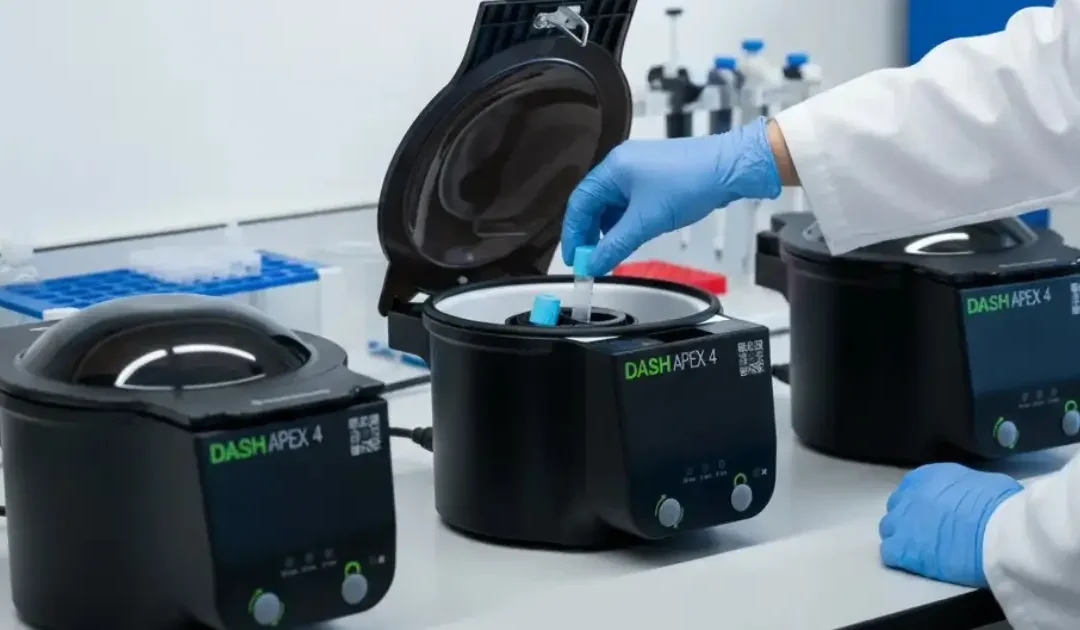
In a clinical lab, the centrifuge is not just another instrument on the bench. It is the instrument that processes every blood draw, every serum sample, every urine specimen before any further testing can take place. Choose the wrong model, and you are looking at compromised separations, unreliable results, and the kind of downstream diagnostic errors that nobody in a clinical setting can afford.
Understanding what separates the best laboratory centrifuge for clinical labs from an instrument that underserves your workflow requires knowing your sample types, your daily volume, and the specific performance features that matter for routine clinical work. This guide gives you everything you need to make that decision with confidence.
How Clinical Centrifuges Differ from Research Models
Not all centrifuges are built for the same purpose. A clinical centrifuge is engineered specifically for the routine diagnostic environment. That means operating at lower, standardized speeds, typically between 300 and 4,500 RPM, with the primary goal of consistently separating blood components, including plasma, serum, red blood cells, white blood cells, and the buffy coat.
Research centrifuges, on the other hand, prioritize flexibility over standardization. They accommodate a wider range of tubes, reach higher speeds for nucleic acid work or protein isolation, and often feature more complex programming options. For a clinical lab running dozens to hundreds of blood tubes daily, that complexity adds no value and increases the risk of operator error. What clinical labs need is precision, repeatability, and speed.
Understanding RPM vs RCF: The Measurement That Actually Matters
When evaluating any centrifuge, you will encounter two speed measurements: RPM (revolutions per minute) and RCF (relative centrifugal force, also expressed as times gravity or xg). RPM describes how fast the rotor is spinning. RCF describes the actual centrifugal force being applied to your sample.
RCF is the value that matters most for separation quality. Two centrifuges running at the same RPM can generate very different RCF values if their rotors have different radii. For standard blood processing, the Journal of Clinical Laboratory Analysis has identified optimal RCF values of 1,000 to 3,000 xg for separating most blood components effectively. Always verify that the centrifuge you are evaluating can deliver the specific RCF required by your SOPs, not just the RPM.
Rotor Type: Fixed-Angle vs Swing-Out for Clinical Applications
Fixed-angle rotors hold tubes at a set angle, typically between 25 and 45 degrees, relative to the vertical axis. Particles move outward and pellet against the side and bottom of the tube. They reach set speed faster and are suitable for general pelleting, but they create a pellet that can be disturbed during tube removal.
Swing-out (swinging-bucket) rotors hold tubes vertically during loading and swing outward to horizontal during operation. Separation occurs along the full length of the tube, producing a well-defined interface between plasma, buffy coat, and red cells. For clinical diagnostic labs focused on blood component separation, swing-out rotors produce cleaner separations and are the preferred choice for serum and plasma harvesting.
Key Features to Look for in the Best laboratory centrifuge for clinical labs
Speed and RCF control: Look for models that allow you to set speed in both RPM and G-force. Protocols vary, and a centrifuge that displays and accepts both units eliminates manual conversion errors.
Brushless DC motor: Maintenance-free brushless motors are quieter, longer-lasting, and less prone to failure than brush-motor designs. In a clinical environment where instrument downtime directly affects patient care, reliability is essential.
Electric lid lock with automatic release: A lid lock that engages before a run and releases automatically when the spin is complete prevents accidental opening mid-run and protects operators from exposure to high-speed rotors. It also prevents samples from overheating during extended runs.
Timed operation with accurate commencement: A timer that starts counting only once the set speed is actually reached ensures that your separation time matches your protocol exactly. This is critical for reproducibility in standardized diagnostic procedures.
IVD compliance: Clinical centrifuges should meet In Vitro Diagnostic (IVD) medical equipment standards, including CE marking and conformity with EN61010-2-101:2002. These certifications confirm the instrument has been tested for safety and performance in diagnostic environments.
A Clinical Centrifuge Worth Considering
The DM0412 Clinical Centrifuge, available through NE LabSystems, is purpose-built for clinical diagnostic use. It operates across a speed range of 300 to 4,500 RPM, displaying speed in both RPM and G-force. The timed operation runs from 30 seconds to 99 minutes, with the timer commencing only once the set speed is reached for accurate, protocol-matched separation times. It features a brushless DC motor, an electric lid lock with automatic release, a PULSE key for quick spins, and an intuitive backlit LCD display. It conforms to international safety standards, including CE, cTUVus, and FCC certifications, and meets IVD medical equipment requirements under EN61010-2-101:2002. For labs processing routine blood chemistry, serum separation, plasma preparation, and vacuum tube samples, it delivers reliable, consistent results every run.
Capacity and Throughput: Matching the Centrifuge to Your Volume
Consider how many samples you process in a typical shift. Most clinical centrifuges accommodate 8 to 12 tubes per run. For a high-volume clinical lab running hundreds of samples per day, throughput efficiency matters as much as separation quality. Look at how quickly the rotor reaches speed, how long each run takes, and how easily tubes load and unload to estimate realistic per-hour throughput.
For labs with variable daily volumes, centrifuges that support both standard 15 mL conical tubes and vacuum tube formats with adapters give you the flexibility to handle different collection formats without switching instruments.
Finding the Right Fit for Your Clinical Lab
The best laboratory centrifuge for clinical labs is one that matches your daily sample types, your required RCF ranges, your tube formats, and your regulatory compliance requirements. Start with your protocols, work outward to the performance specifications those protocols demand, and evaluate instruments against those requirements directly. Browse the full centrifuge range at NE LabSystems, all backed by free extended warranties on U.S. purchases and support from factory-trained engineers. Call (877) 733-6838 to speak with a specialist.