
Buying a biochemistry analyzer is one of the most significant decisions your lab will make. Get it right, and you gain speed, accuracy, and a workflow that keeps up with demand. Get it wrong, and you are sitting with an expensive machine that either overwhelms your team or underserves your testing needs.
This guide is here to help you cut through the noise. Whether you are setting up a new lab or upgrading your current system, understanding the biochemistry analyzer price and features landscape before you commit is essential.
What Does a Biochemistry Analyzer Actually Do?
At its core, a biochemistry analyzer is a diagnostic instrument that measures the concentration of chemical substances in biological fluids, most commonly blood, serum, plasma, and urine. The underlying principle is spectrophotometry, specifically Beer’s Law, which governs how substances selectively absorb light. By analyzing those light absorption patterns, the instrument produces precise, quantifiable data on markers like glucose, cholesterol, enzymes, electrolytes, liver enzymes, and kidney function indicators.
These results directly inform clinical decisions. That is why accuracy is non-negotiable and why the right analyzer for your lab matters so much.
The Three Main Types You Need to Know
Understanding the types of biochemistry analyzers available is the first step in narrowing down what makes sense for your budget and workflow.
- Manual analyzers require hands-on handling of samples and reagents at every step. They are the most affordable entry point, but are not suited for labs handling consistent daily volumes. Human error is a genuine risk, and throughput is inherently limited.
- Semi-automatic analyzers automate key steps like reagent mixing and measurement while still requiring manual sample loading and some preparation. They are compact, cost-effective, and well-suited for small to medium-sized laboratories, point-of-care settings, and facilities with skilled technicians who can manage the manual steps reliably.
- Fully automatic analyzers handle the entire process from sample loading to result reporting with minimal human intervention. They are the preferred choice for high-volume clinical labs and hospital settings where speed, throughput, and reduced risk of operator error are the top priorities. They are also, predictably, the most expensive.
Biochemistry Analyzer Price: What Should You Expect to Pay?
This is where many labs get caught off guard, so let us be direct about it.
Entry-level and semi-automatic models can start well under $10,000 USD, making them accessible for smaller labs and growing practices. Mid-range benchtop fully automatic systems typically fall in the $20,000 to $80,000 range, depending on throughput and test menu breadth. High-throughput modular analyzers designed for large hospital labs or diagnostics companies can cost $100,000 to $250,000 or more.
But the biochemistry analyzer price is only part of the story. The total cost of ownership includes reagents, calibrators, service contracts, software integration, and staff training. A lower purchase price can come with higher ongoing reagent costs. A higher upfront investment can reduce labor and operational costs significantly over time. You need to weigh both sides.
For budget-conscious labs, the semi-automatic category often represents the smartest starting point. You get reliable, accurate results on a manageable budget, without the overhead demands of a fully automated system your current volume does not yet justify.
Key Features to Evaluate Before You Buy
Once you have a price range in mind, these are the features that should shape your final decision.
- Throughput is the number of tests the analyzer can process per hour. If your lab handles a high daily sample volume, throughput directly affects your turnaround times. A system that bottlenecks at 200 tests per hour can become a serious operational constraint in a busy diagnostic environment.
- Test menu breadth determines how versatile your analyzer is. Some models are built for routine panels covering liver function, kidney function, lipid profiles, and glucose. Others extend into immunology, endocrinology, and toxicology. Know what tests your lab runs today and what it may need to run in the next few years.
- Interface and ease of use affect how quickly your team can operate the system and how much training is required to get it running at full capacity. Touchscreen interfaces and intuitive software make onboarding faster and reduce errors at the user level.
- Calibration and quality control features are critical for labs operating under regulatory frameworks like CLIA (Clinical Laboratory Improvement Amendments) in the United States. Analyzers that support internal quality control and auto-calibration reduce the administrative burden of compliance.
- Connectivity and data integration determine whether the system can link with your Laboratory Information System (LIS). For larger labs and hospital networks, seamless data transfer eliminates manual transcription and supports better documentation practices.
A Product Worth Highlighting: The Stat Fax 4500 Biochemistry Analyzer
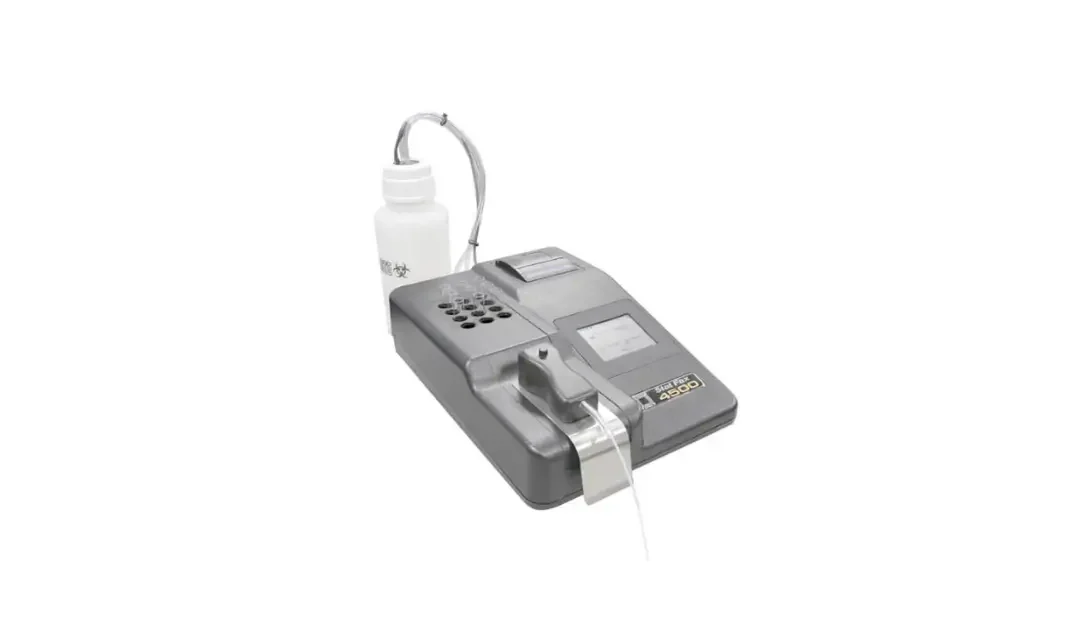
If you are a small to mid-sized lab looking for a reliable, precise, and budget-friendly option, the Stat Fax 4500 Biochemistry Analyzer, available through NE LabSystems, is a strong choice to consider.
It is a compact, standalone chemistry analyzer with built-in 12-station incubation, an on-board printer, and a touchscreen interface. As a semi-automatic clinical biochemistry analyzer, it gives your team precise control over the testing process without the complexity and cost of a fully automated system. It is factory-calibrated, which means it is ready to deliver reliable results from day one.
For labs that want performance and precision without overextending their budget, this is exactly the kind of instrument that delivers real value.
Matching Your Budget to the Right Analyzer
The best biochemistry analyzer price and features combination for your lab depends on a clear-eyed view of your current needs and your growth trajectory. A lab processing 50 samples a day has very different requirements from one processing 500.
Start with your test volume. Layer in your required test menu. Then factor in your staffing capacity and your compliance obligations. That process will narrow your options significantly and prevent you from overspending on automation you do not yet need or underspending on a system that creates bottlenecks.