
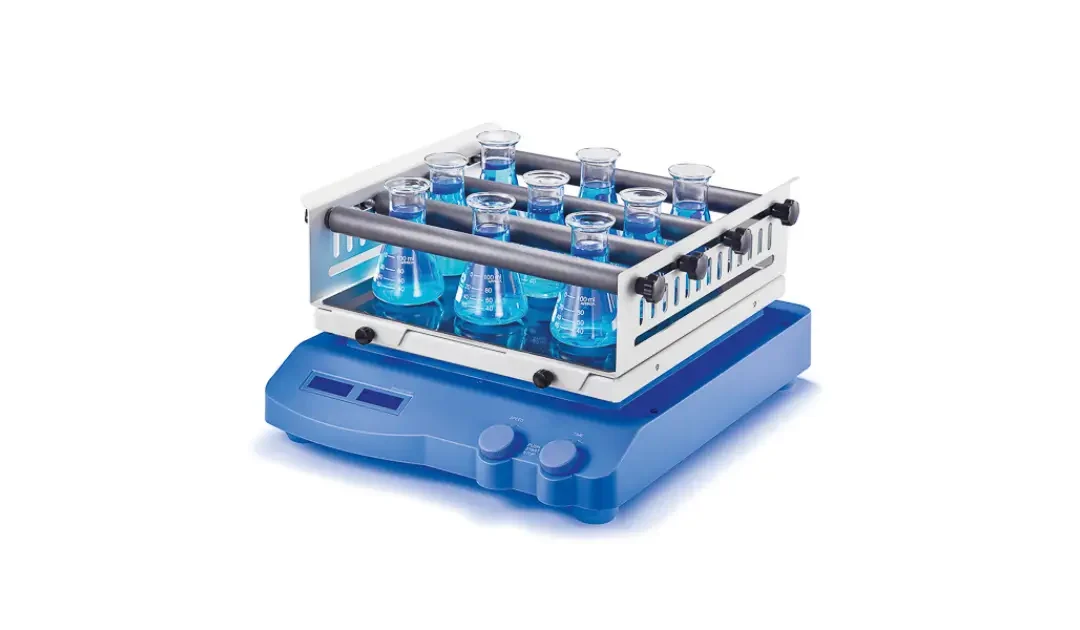
The difference between an analog laboratory shaker and a digital laboratory shaker is, at its most fundamental, a difference between estimating a parameter and measuring it. An analog shaker sets an approximate speed through a dial that corresponds to a motor voltage. A digital shaker measures its actual operating speed through a real-time sensor and maintains the programmed value precisely through closed-loop control. For routine applications where approximate speed is sufficient, this distinction is invisible. For any application where speed is a controlled experimental variable, the distinction is what separates reproducible results from variable ones.
This guide covers the defining features of digital laboratory shakers, the applications they serve across the speed range, and why the digital format offers measurable benefits over analog models.
Closed-Loop Speed Control: The Core Feature
A digital laboratory shaker uses a speed sensor to measure actual platform RPM in real time and feeds that measurement back to a microprocessor controller that adjusts motor output to maintain the programmed set point. This closed-loop system means that the displayed speed on the LCD screen is the actual operating speed, not an approximation based on dial position. When you program 200 RPM, the instrument’s own sensor verifies that it is running at 200 RPM and corrects any deviation immediately.
This closed-loop control eliminates the main sources of speed variability in analog shakers: motor load variation (the speed drops when heavier loads are added to an analog shaker), ambient temperature effects on motor characteristics, and mechanical wear over time. A digital shaker maintains its set speed under all of these conditions, producing consistent agitation regardless of flask load, environmental temperature, or instrument age.
Programmable Timer Functions
Digital laboratory shakers include programmable timer functions that define the exact duration of a shaking protocol. When the set time expires, the instrument stops automatically. This feature has two practical benefits: it creates consistent protocol endpoints without requiring operator presence at the end of each run, and it enables timed runs to be documented as part of the experimental record, since the actual run duration matches the programmed duration reliably.
For labs running multiple protocols simultaneously or protocols that extend through breaks in the working day, timer-controlled automatic stopping is not just convenient. It prevents the subtle systematic error of over-incubating samples because the operator was delayed.
Digital Display and Protocol Documentation
The LCD display of a digital laboratory shaker shows actual operating speed and remaining time simultaneously, providing a real-time status of the run at a glance. For regulated laboratory environments operating under GLP, ISO 17025, or CLIA frameworks, the ability to read and record actual instrument parameters during a run, rather than dial positions that approximate performance, satisfies documentation requirements that analog instruments cannot meet.
Advanced models with PC connectivity via RS232 or USB interfaces support data logging, recording actual speed and time values throughout the run. This creates a full electronic record of instrument performance for every run, which is the gold standard for regulated laboratory documentation.
Applications Across the Speed Range
Bacterial suspension culture (200 to 250 RPM): The digital shaker’s precise speed maintenance ensures consistent oxygen transfer rate across all flasks in a run, producing comparable growth kinetics and yields between replicate cultures.
Yeast culture (120 to 250 RPM): Yeast growth rate responds to agitation speed in a predictable way. Digital speed control allows you to precisely replicate the conditions from one run to the next, making it possible to compare growth rates between experiments conducted weeks apart.
ELISA plate incubation (50 to 100 RPM): For assays where shaking during incubation is specified in the protocol, digital control ensures the shaking condition is exactly what the protocol requires, not an approximation.
Gel staining (15 to 70 RPM): At the low end of the speed range, digital control is even more valuable because small absolute differences in speed at low RPM have proportionally larger effects on mixing intensity.
Brushless Motor Advantage
Premium digital laboratory shakers use brushless DC motors, which are maintenance-free, longer-lasting, quieter, and more consistent over the instrument’s service life than brush motor designs. The SCILOGEX SCI-O180-Pro from NE LabSystems combines a brushless DC motor with a 100 to 800 RPM digital range, dual LCD displays, cold room and incubator compatibility, and PC control via RS232. Browse the full digital shaker range at NE LabSystems or call (877) 733-6838 for a recommendation matched to your application needs.