
Walk into any regulated laboratory, pharmaceutical facility, or clinical testing environment, and you will find something invisible at work behind every result produced. It is not just the equipment on the bench. It is the controlled environment surrounding that equipment.
Temperature, humidity, air quality, pressure differentials, and microbial particulates all play a direct role in whether your results are reliable. And in regulated industries, they determine whether you remain compliant. Environmental monitoring solutions for industries are the systems and instruments that keep all of those variables in check, documented, and defensible.
This blog breaks down what those solutions actually involve, which industries depend on them most, and how the laboratory equipment you choose connects directly to your monitoring outcomes.
What Environmental Monitoring Actually Covers
Environmental monitoring is not a single instrument or a single measurement. It is a systematic, documented program designed to track and control the physical and biological parameters of a controlled working environment.
In regulated manufacturing and laboratory settings, environmental monitoring typically covers temperature and humidity control, airborne particulate matter, including both viable and non-viable particles, differential pressure between zones, water quality for facilities where water contacts products directly, and surface and air microbial contamination. Each of these parameters feeds into your compliance posture and your product or sample integrity.
In pharmaceutical manufacturing, for example, Good Manufacturing Practice (GMP) guidelines require continuous monitoring and full traceability of these parameters throughout production. Deviations in temperature or humidity can encourage microbial growth. Pressure differentials, when not properly maintained, allow contaminants to migrate between classified zones. Failing to detect these events before they affect your product is not just a compliance problem. It is a patient safety problem.
The Industries That Depend on Environmental Monitoring Solutions
- Pharmaceutical and biotech manufacturing represents the clearest case. Cleanroom environments for sterile product manufacturing must comply with standards set by the FDA, GMP, and ISO 14644-1, governing airborne particulate cleanliness classifications. Real-time monitoring of temperature, relative humidity, and differential pressure is mandatory, and every excursion must be logged with a documented corrective action.
- Clinical and diagnostic laboratories depend on controlled conditions to protect the integrity of biological samples. Blood, serum, urine, and tissue samples are all sensitive to environmental fluctuations. An incubator running two degrees hotter than its set point can compromise an entire batch of cultures. A humidity spike in a sample storage area can degrade reagents and skew downstream results.
- Food and beverage testing labs rely on environmental monitoring to validate that their testing environments are free from contamination that could produce false results on safety-critical assays. Environmental conditions affect colony growth, enzyme activity, and chemical reaction rates in ways that matter enormously for food safety determinations.
- Research institutions and universities use environmental monitoring to protect the validity and reproducibility of experimental data. When ambient conditions shift unpredictably, experimental variables shift too. A proper monitoring program provides the baseline data you need to distinguish between a genuine biological result and an artifact of environmental drift.
How Environmental Monitoring Connects to Your Lab Equipment
This is the part that many labs underestimate. Your environmental monitoring solutions for industries are only as effective as the equipment operating within those monitored environments. If a centrifuge generates excessive heat during operation, it affects the ambient temperature in your lab. If an incubator’s temperature control is imprecise, your monitoring system will catch the deviation, but the damage to your cultures may already be done.
That connection works in the other direction, too. High-quality lab equipment, properly maintained, contributes to a more stable and predictable environment. It reduces the number of excursions your monitoring system flags. It keeps your corrective action log lean and your audit reports clean.
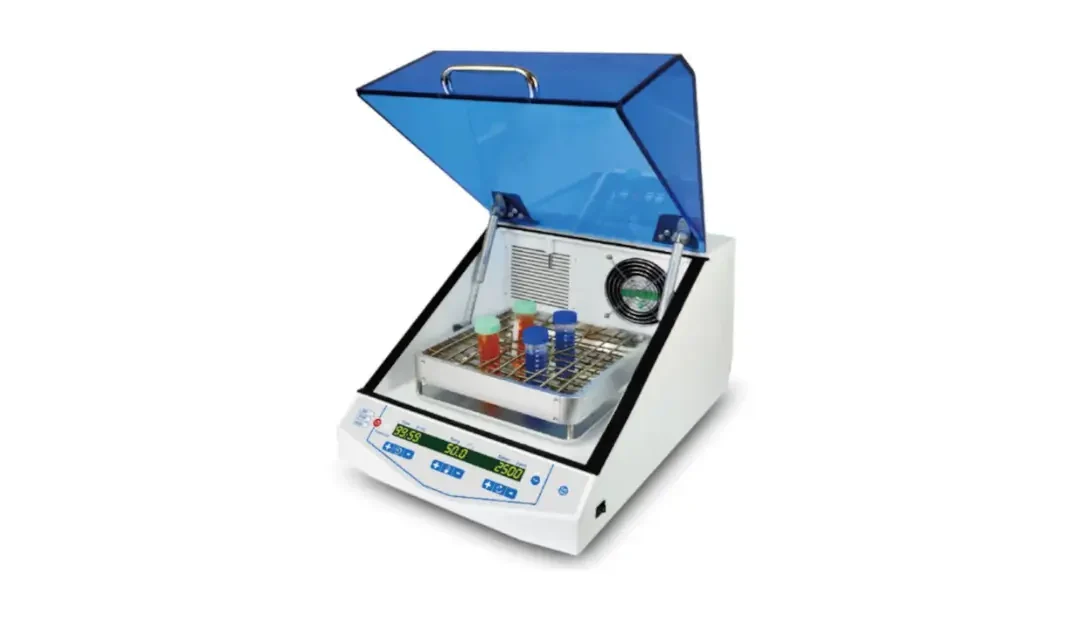
Incubators used in microbiology, cell culture, and environmental sample analysis need to maintain temperature stability within tight tolerances. At NE LabSystems, the ES-60 Incubator Series is built precisely for this. It features microprocessor-based PID temperature control for high precision and stability across a range of ambient temperatures from +5°C to 60°C. The digital LED display makes it simple to monitor current settings, and the acrylic lid lets your team check on samples without opening the unit and disrupting the internal environment. For labs performing microbiological analysis, cell culture work, or environmental sample incubation, this kind of temperature reliability is not optional. It is foundational to meaningful results.
Water baths, shakers, and circulators similarly contribute to your environmental stability. Instruments that maintain precise, consistent operating temperatures reduce the thermal variability in your workspace and protect the samples you have invested significant time and resources preparing.
Building an Effective Environmental Monitoring Program
The most effective programs are not reactive. They are designed to catch problems before they become failures.
According to GMP standards, a well-designed environmental monitoring program should define alert and action limits for each parameter, establish monitoring frequency based on the risk profile of each space, require documented corrective actions whenever a limit is exceeded, and mandate calibration of all monitoring instruments at defined intervals. This is not just paperwork. It is the framework that allows you to demonstrate to regulators, auditors, and customers that your facility is in control.
ISO 17025, which governs testing and calibration laboratories, also requires that labs monitor and control environmental conditions to ensure that equipment performance is not compromised. This applies to temperature, humidity, and cleanliness, and it demands documented evidence that those conditions were maintained throughout the period in which testing was conducted.
Knowing those requirements, you can see exactly why your equipment choices matter. A centrifuge with poor thermal management, an incubator with inconsistent heating, or a shaker that vibrates excessively can all introduce environmental variability that your monitoring program will detect and that your compliance team will have to address.
Your Environment Is Part of Your Result
Every measurement your lab produces reflects not just your analytical method and your equipment, but also the environment in which the work was done. When that environment is controlled, monitored, and documented, your results have integrity that can be defended under scrutiny.
At NE LabSystems, we supply the lab equipment that sits at the heart of monitored environments across New England and throughout the United States. From precision incubators and water baths to centrifuges and shakers, every instrument in our catalog is backed by free extended warranties on U.S. purchases and support from factory-trained engineers who understand what controlled environments actually demand.
Browse our full range of laboratory equipment online, or call our team to find the instruments that will support both your scientific work and your compliance program.