
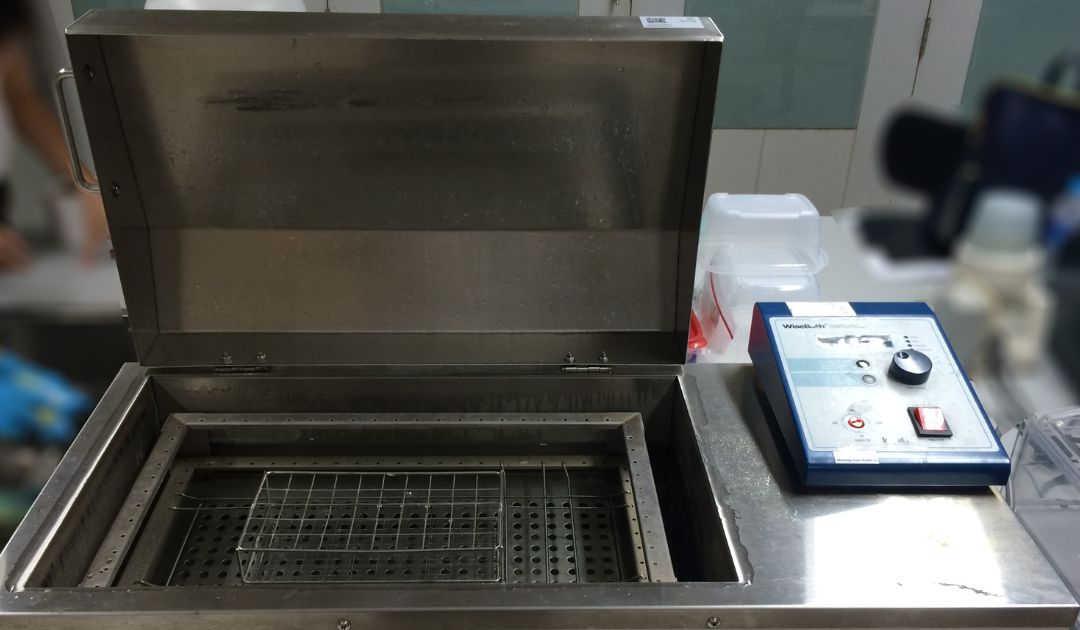
The laboratory water bath is one of the most enduring instruments in scientific research, precisely because water is one of the most effective natural heat transfer media available. Its high thermal capacity, excellent contact with submerged vessels, and consistent convective distribution of heat make it ideal for any application where samples must be maintained at a controlled temperature over an extended period. Despite the emergence of dry heat alternatives, the water bath remains irreplaceable for a significant range of laboratory applications across clinical, research, and industrial settings.
This guide covers the main types of laboratory water baths, the specific applications each serves best, and the key features to evaluate when selecting a model for your lab.
How A Laboratory Water Bath Works
A water bath consists of a stainless steel or polycarbonate chamber filled with water, a heating element that raises water temperature to the set point, a thermostat that maintains the temperature once reached, and a control interface for setting and monitoring conditions. Samples in tubes, flasks, or beakers are placed in or on the water, which transfers heat through direct contact and convection. The result is gentle, uniform heating that is well-suited for biological samples sensitive to rapid temperature changes or localized hot spots.
Types Of Laboratory Water Baths
Standard (non-circulating) water baths maintain temperature through simple heating without a pump or stirring mechanism. They are quiet, affordable, and appropriate for applications where sample uniformity across different positions in the bath is not the primary concern. According to Wikipedia’s scientific instrumentation documentation, this type relies primarily on convection, which makes it less precise in terms of spatial temperature uniformity than circulating models, but adequate for routine incubation, thawing, and warming applications.
Circulating water baths use an integrated pump or stirrer to continuously circulate water throughout the chamber. According to Thermoline Scientific’s technical comparison, circulating water baths offer uniform temperature distribution, improved heat transfer, and better temperature stability, making them ideal for experiments requiring high precision and consistency. Enzymatic and serological testing are specifically suited to this type because temperature uniformity across every tube in the bath is critical for comparable results between samples.
Shaking water baths add an orbital or reciprocating agitation function to the standard heated chamber. This allows samples to be mixed continuously while maintained at a controlled temperature, serving applications in microbiology, cell aeration, solubility studies, and hybridization protocols where both temperature control and mixing are required simultaneously.
Key Uses Of The Laboratory Water Bath
The laboratory water bath serves a broad range of applications across disciplines. Thawing frozen biological and patient samples is one of the most common clinical uses: Drawell Analytical technical documentation notes that a water bath set to 37 degrees Celsius with gentle circulation ensures consistent, reliable thawing of serum, plasma, and urine samples stored frozen, avoiding the rapid or uneven thawing that can alter analyte concentrations.
Incubating clinical assays is another critical application. Many clinical chemistry and immunoassay procedures require incubation at specific temperatures, often 37 degrees or 56 degrees Celsius. The stable environment of a water bath provides the consistent conditions needed for reproducible results across patient samples. Enzyme reactions also benefit from the precise temperature maintenance of a water bath, since enzyme kinetics are highly temperature-dependent and even small deviations from the optimal temperature alter reaction rates and final product concentrations.
Warming reagents and melting temperature-sensitive materials, including sealing wax, substrate solutions, and agar, are routine uses in clinical and research labs. For flammable chemicals, water baths are preferred over open flame heating because the absence of flame eliminates ignition risk, as documented by Wikipedia’s scientific resources on laboratory water bath use.
Key Features To Consider
Temperature range is the first specification to evaluate. Standard water baths cover ambient to 99 degrees Celsius, but some applications require lower ambient baselines. For applications requiring very precise temperature across all sample positions, a circulating model is necessary. Digital temperature control with an LCD display allows precise set-point entry and monitoring.
Chamber capacity determines how many samples you can process simultaneously. Lid design affects evaporation rate and energy efficiency during extended runs. A drain valve simplifies emptying and cleaning. For labs running biological samples, a water bath with an antimicrobial interior surface or easy-clean stainless steel chamber reduces maintenance burden and contamination risk.
The Right Water Bath For Your Laboratory
At NE LabSystems, we carry a full range of laboratory water bath options suited to clinical, research, and industrial applications, all backed by free extended warranties on U.S. purchases and factory-trained engineering support. Browse our water bath selection or call (877) 733-6838 to discuss which model matches your temperature requirements, sample formats, and throughput needs.