
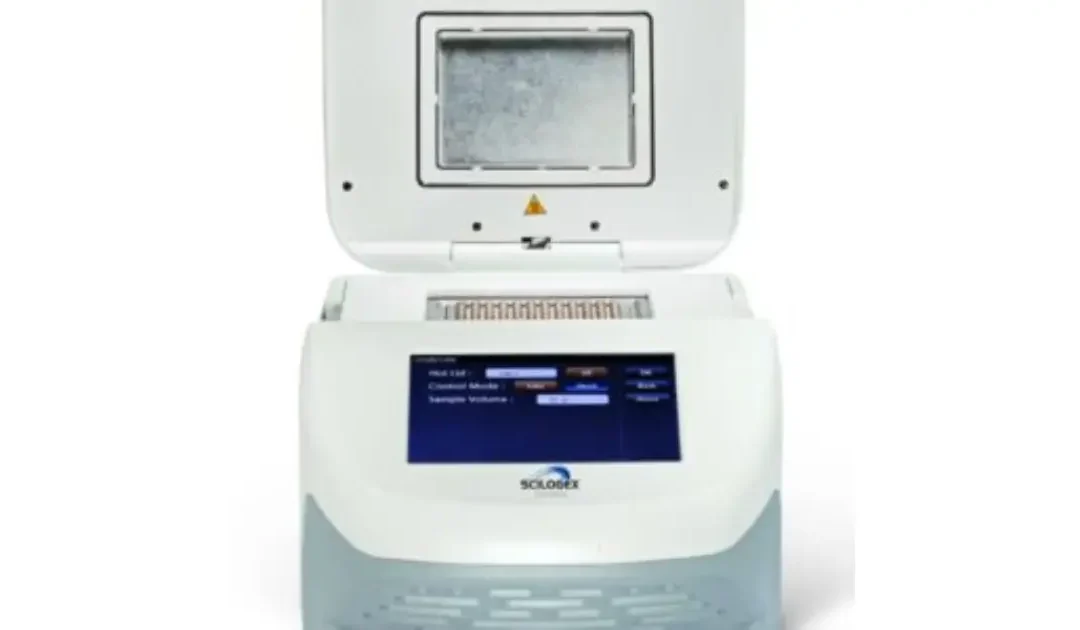
PCR is one of the most powerful and widely used techniques in molecular biology. It can amplify a single copy of a DNA sequence into millions of copies within hours. But its power is entirely dependent on the quality of your instrument. A thermal cycler that cannot maintain precise temperatures, deliver consistent ramp rates, or hold a stable annealing step will undermine even the most carefully designed protocol.
If you want to maximize PCR results, your thermal cycler is not a secondary consideration. It is a primary one. This guide walks you through the key features that separate high-performing cyclers from underperforming ones and explains what to prioritize when choosing the right instrument for your lab’s work.
Understand What a Thermal Cycler Actually Does
A thermal cycler automates the repeated temperature cycling that PCR requires. Each cycle typically involves three steps: denaturation at around 94 to 98 degrees Celsius, where the double-stranded DNA template is separated into two single strands; annealing at a lower temperature, where primers bind to their complementary sequences on the template; and extension at approximately 72 degrees Celsius, where the DNA polymerase synthesizes the new strand.
Modern thermal cyclers use Peltier elements, thermoelectric devices that heat and cool rapidly and precisely, to control the temperature of the metal block holding your samples. The speed and accuracy with which the block reaches each target temperature directly affect whether your reaction succeeds, fails, or produces non-specific amplification.
Ramp Rate: The Underrated Variable
Ramp rate is the speed at which your thermal cycler changes temperature between steps, measured in degrees Celsius per second. High ramp rates reduce the total run time significantly. A cycler capable of 5 degrees per second heating and 3.5 degrees per second cooling can complete a standard 30-cycle PCR run in well under an hour. A slower unit running at 2 degrees per second stretches the same protocol across two hours or more.
Beyond speed, ramp rate consistency matters. A cycler that overshoots or undershoots the target temperature during ramp transitions exposes your samples to temperatures they were never meant to see. This introduces non-specific amplification, reduces yield, and creates gel results that are difficult to interpret. When evaluating instruments, look specifically for data on overshoot and undershoot performance, not just maximum ramp rate.
Block Uniformity: Where Results Live or Die
Temperature uniformity across the block determines whether every tube in your run sees the same conditions. A block with poor uniformity means that tubes in the center and tubes at the edges are running slightly different protocols, which produces inconsistent band intensities and variable yields across your samples.
The best thermal cyclers use high-conductivity materials like silver in their blocks and precise calibration to achieve uniformity within plus or minus 0.2 degrees Celsius across all positions. This level of consistency is essential for quantitative applications, multiplex reactions, and any work where reproducibility between runs matters.
Gradient Function: A Tool for Protocol Optimization
Gradient thermal cyclers allow you to set a temperature range across the block rather than a single uniform annealing temperature. This means you can test 8 or 12 different annealing temperatures in a single run, identifying the optimal condition for your primer pairs without running a dozen separate experiments.
According to Thermo Fisher Scientific, the annealing temperature is the most critical variable in PCR optimization, and finding the precise optimum requires systematic temperature testing. A gradient function compresses that process from days or weeks of iterative runs into a single experiment, saving both time and reagents.
Heated Lid: Essential, Not Optional
A heated lid applies pressure and heat to the tops of your tubes or plate, preventing condensation from forming on the inner surface above the reaction volume. Without it, water vapor condenses, slides back into the reaction, and dilutes your reagents. The result is reduced amplification efficiency and inconsistent results.
Most modern thermal cyclers include a heated lid as standard. When evaluating models, confirm the lid temperature range and whether it can be programmed independently for different protocols. Some lids are adjustable between 60 and 115 degrees Celsius, which provides the flexibility needed across a wide range of tube formats and reaction conditions.
Block Format and Sample Capacity
The 96-well format is the standard for most labs, but many modern cyclers offer interchangeable blocks for 0.2 mL tubes, PCR strips, and 384-well plates. Interchangeable block designs are valuable for labs that run diverse formats, allowing a single instrument to serve multiple applications without requiring separate units.
For labs with very high throughput or specialized needs, dual-block cyclers allow two independent protocols to run simultaneously on the same instrument, effectively doubling capacity without doubling bench space.
Choosing the Right Thermal Cycler for Your Lab
If your lab runs routine PCR protocols with standard primer sets, a mid-range cycler with good block uniformity, a heated lid, and reliable ramp rates will serve you well. If you regularly develop new assays, work with novel primer pairs, or run multiplex reactions, a gradient-capable cycler is worth the investment for the optimization efficiency alone.
At NE LabSystems, we carry a range of thermal cyclers built for both routine and demanding molecular biology workflows, all backed by free extended warranties on U.S. purchases and support from factory-trained engineers. Browse our thermal cycler range online or call (877) 733-6838 for a recommendation tailored to your specific PCR applications.