
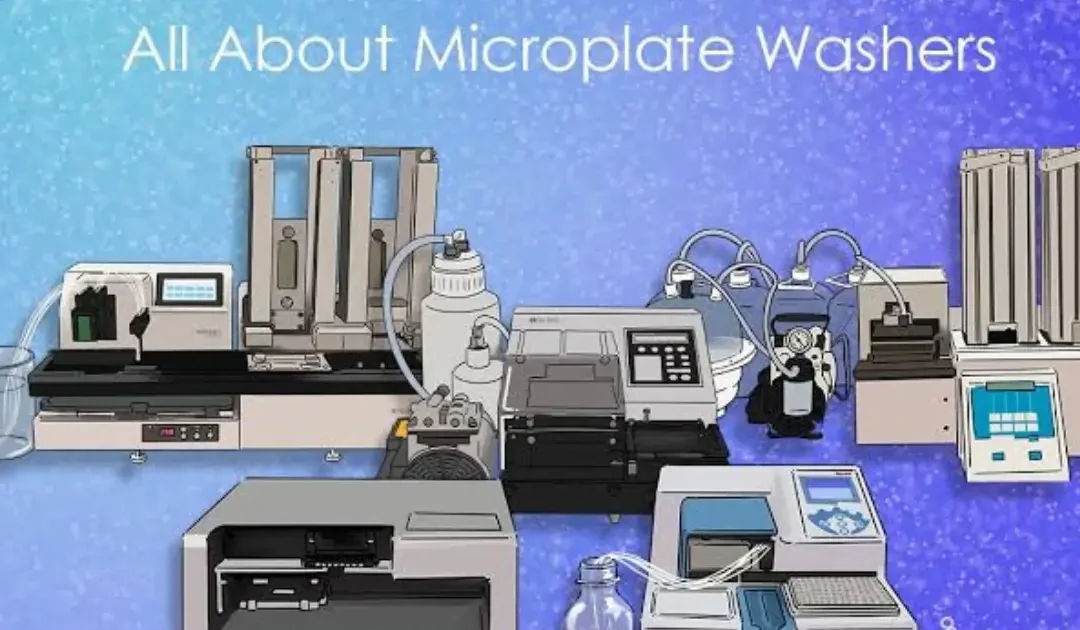
Choosing a microplate washer is not a decision that should follow a simple checklist. The wrong model for your workflow does not just fail to solve your existing problems. It creates new ones: background noise that climbs between runs, wells that aspirate inconsistently, protocols that produce different results depending on who ran them. These are the kinds of problems that take time to diagnose correctly because they do not look like equipment problems. They look like reagent problems, operator problems, or assay design problems. This guide is designed to prevent exactly that.
A thorough microplate washer buying guide covers more than plate format compatibility and sticker price. It covers the performance specifications, software features, and operational factors that determine whether your washing step supports or undermines your assay quality. Every factor below is worth evaluating before you commit.
Step One: Define The Assays Your Washer Needs To Support
The most important first step in any microplate washer buying decision is a clear-eyed assessment of your current and anticipated assay types. Different applications place very different demands on the washing instrument.
Standard sandwich ELISAs require thorough, multi-cycle washing with defined soak times and consistent aspiration to minimize background. Competitive and inhibition immunoassays are even more sensitive to residual unbound material because it directly compresses the assay range and reduces sensitivity. Cell-based assays introduce an additional constraint: the aspiration must be gentle enough to avoid detaching viable cells from the plate surface. Bead-based multiplex assays require low-speed aspiration to prevent bead loss and cross-well contamination. Define which of these your lab runs today, and which you expect to run in the next one to two years. This definition shapes every subsequent decision.
Plate And Strip Format Compatibility
Not every microplate washer supports every plate format, and format mismatches create real operational problems. Verify that any model you evaluate supports the specific formats your lab uses: standard 96-well flat-bottom plates, V-bottom and round-bottom plates, 48-well plates, 384-well plates for higher throughput, and individual microstrips for low-volume runs.
Strip washing is particularly important for labs that process partial plates frequently. A washer that can handle two, four, or eight individual strips without requiring operator workarounds or full-plate setup significantly reduces reagent consumption and turnaround time per run. Confirm that the washer’s strip mode maintains the same wash quality as its full-plate mode. Some instruments downgrade aspiration consistency in strip mode, which defeats the purpose of the format flexibility.
Residual Volume: The Specification That Predicts Assay Background
Residual volume per well after aspiration is the single most predictive specification for ELISA background noise. Any liquid remaining in the well after aspiration dilutes the next reagent addition, extends equilibration time, and if it contains residual unbound material, contributes directly to background signal. The industry benchmark for high-performance ELISA washing is less than 2 microliters of residual volume per well.
Ask specifically for residual volume data under your working conditions, not just under optimal lab conditions. Some manufacturers publish residual volume specifications measured with distilled water in a controlled environment. Performance with actual wash buffer in a clinical or research lab environment may differ. Models with double aspiration or cross-wise aspiration head designs consistently achieve lower residual volumes than single-pass designs and are the better choice for sensitive assays.
Programmable Wash Parameters And Protocol Memory
Any microplate washer buying guide that does not emphasize programmable wash parameters is missing the point of automated washing. The entire value of automated washing is that it applies identical conditions to every well, every plate, every run. That value is only realized if you can program the conditions precisely and save them reliably.
Parameters you must be able to set independently: wash volume per well (typically 200 to 350 microliters for 96-well ELISA), number of wash cycles (three to five per wash step is standard), soak time between dispense and aspiration, aspiration speed, and aspiration height. Protocol memory storage allows validated washing programs to be saved by name and recalled by any operator. This eliminates manual entry errors, ensures run-to-run consistency across operators, and provides documented evidence of wash conditions for compliance audits.
Anti-Clogging Protection: Protecting Day-To-Day Reliability
Needle clogging is the most common source of unexpected, difficult-to-diagnose variability in microplate washer performance. Wash buffer crystallizes inside dispense and aspiration needles during idle periods, partially blocking the flow path and producing inconsistent dispense volumes or incomplete aspiration. The result shows up in your CV values before anyone thinks to check the washer.
Premium washers include automatic rinse-and-soak cycles that activate when the instrument has been idle for a defined period, preventing crystallization before it occurs. This feature alone eliminates one of the most common root causes of assay variability that labs spend significant time incorrectly attributing to reagent lots, sample handling, or operator technique.
Safety Features And Liquid Level Monitoring
For labs running washers throughout a full working day, liquid level monitoring in the wash buffer reservoir and waste bottle is a practical safety feature with real operational impact. A washer that runs out of wash buffer mid-protocol leaves some wells unwashed, producing a plate where some positions received one fewer wash cycle than others. This is an assay failure that may not be immediately obvious, particularly in low-background assays where a single missed wash cycle produces subtle rather than dramatic signal changes.
Liquid level sensors that alert the operator before the reservoir runs dry, or that halt operation automatically before a partial-plate event occurs, protect both your samples and your assay data. For high-throughput labs running multiple plates consecutively, this feature significantly reduces the risk of batch failures due to consumable management oversights.
A Washer Worth Highlighting: The Stat Fax 2600
The Programmable Stat Fax 2600 Microplate/Microstrip Washer from NE LabSystems addresses the practical requirements of this microplate washer buying guide directly. It washes flat, round, and V-bottom plates and strips. It performs automatic calibration, alignment, and last row detection, requiring no user adjustments to operate. It supports programmable wash protocols with mix, soak, and timing functions that remain constant regardless of run size. Double aspiration ensures complete liquid removal per well, and the software automatically adjusts for different plasticware formats. It is NRTL- and CE-certified. For ELISA-focused clinical and research labs, it delivers the wash consistency that assay quality depends on.
Total Cost Of Ownership: The Calculation That Matters
The purchase price of a microplate washer is only the starting point of the cost calculation. Factor in the cost of replacement manifolds and aspiration probes, maintenance requirements and service contracts, the cost of assay failures attributed to wash variability before the problem is correctly identified, and staff time spent troubleshooting wash-related performance issues. A washer with a lower upfront price but frequent maintenance requirements and poor protocol memory can cost significantly more over a three- to five-year operational period than a higher-priced model with robust engineering and full-featured software support.
Browse the full microplate washer range at NE LabSystems or call (877) 733-6838 to discuss which model fits your assay types, plate formats, and throughput requirements.