
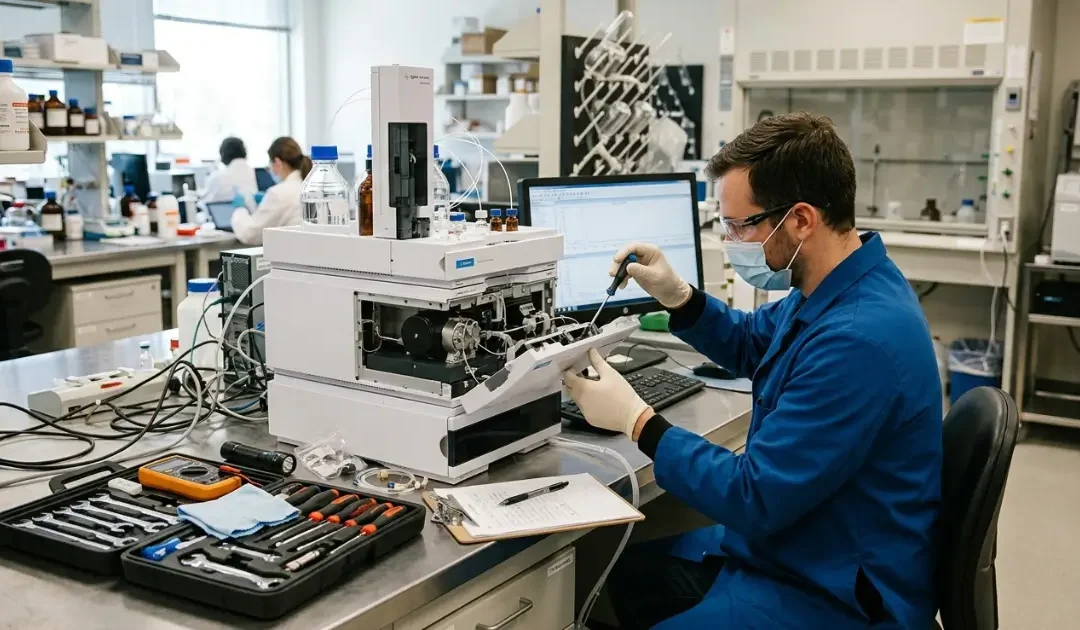
A laboratory equipment maintenance checklist is the practical tool that converts a maintenance program from a policy into a practice. It transforms general intentions about maintaining instruments into specific, scheduled, documented actions that each piece of equipment receives at the right intervals. Without a checklist, maintenance happens inconsistently: some tasks are performed when remembered, others are skipped during busy periods, and the documentation trail that regulatory auditors require is incomplete. With a structured checklist, maintenance becomes systematic, auditable, and effective.
This guide provides a framework for building and using a laboratory equipment maintenance checklist across the most common laboratory instrument categories.
Why a Structured Checklist Matters
LabTech Supply’s maintenance documentation notes that a preventive maintenance program should be outlined for each piece of equipment, and that the file should contain all servicing and calibration done on the laboratory equipment, including the corresponding dates. A checklist is the instrument-specific implementation of that requirement. It defines exactly what tasks are performed, at what intervals, by whom, and it provides the field for recording what was found and any corrective actions taken.
For regulated clinical laboratories, CLIA regulation 42 CFR 493.1255 mandates that all moderate- and high-complexity clinical laboratories maintain documented maintenance schedules for every instrument used in patient testing. The laboratory equipment maintenance checklist is the documentation vehicle that demonstrates compliance with this mandate.
Daily Maintenance Checklist Items
Daily items in a laboratory equipment maintenance checklist are typically operator-level checks performed at the start or end of each day. Across most laboratory instruments, these include: visual inspection of the instrument exterior for obvious damage, leaks, or abnormal conditions; confirmation that power, connections, and basic controls are functioning normally; cleaning of sample contact surfaces; checking consumable levels (water bath fill level, CO2 tank pressure for CO2 incubators, centrifuge tube holder integrity); and recording of any error codes or unusual instrument behavior.
Weekly Maintenance Checklist Items
Weekly tasks go deeper than daily checks: more thorough cleaning of instrument interiors and accessible components, inspection of consumables for approaching replacement thresholds, review of error logs from the past week, and verification of basic calibration parameters such as temperature display accuracy for baths and incubators and rotation speed for mixers. Weekly tasks may also include cleaning of rotors and centrifuge bowls, cleaning of water bath tanks to prevent early scale buildup, and inspection of all safety features including lid locks, door seals, and interlock systems.
Monthly Maintenance Checklist Items
Monthly tasks address items that accumulate or degrade over multi-week timescales: CO2 sensor calibration checks for CO2 incubators, calibration verification of temperature sensors against reference thermometers, inspection and lubrication of moving parts where specified by the manufacturer, water bath drain and refill to prevent mineral scale accumulation, and inspection of all filter systems in ventilated instruments. Monthly tasks are typically performed by a dedicated maintenance technician rather than daily operators.
Quarterly and Annual Maintenance Checklist Items
Quarterly tasks include speed accuracy verification for centrifuges against a calibrated tachometer, comprehensive calibration verification for all analytical instruments against certified reference standards, inspection of electrical connections and power supply systems, and replacement of wear parts approaching their manufacturer-specified service life. Annual tasks include comprehensive calibration by a qualified external service technician, full mechanical inspection including bearings and drive belts in shakers and centrifuges, and review and update of the maintenance program itself against current manufacturer guidance and regulatory requirements.
Instrument-Specific Checklist Considerations
A complete laboratory equipment maintenance checklist is instrument-specific, not generic. Each instrument has unique maintenance requirements defined by its manufacturer that must be incorporated into the checklist. The manufacturer’s service manual is the primary source for these requirements, supplemented by regulatory guidance for the instrument category. Generic checklist templates are a starting point, but they must be customized to each specific instrument model to be effective and defensible under audit.
Using the Checklist as a Communication Tool
The completed laboratory equipment maintenance checklist serves as a communication tool between laboratory departments: it tells quality managers what maintenance was performed and when, it tells service technicians what has been done since the last service visit, and it tells new staff what the maintenance requirements are for each instrument. Stored in a LIMS, spreadsheet, or physical binder alongside the instrument, it becomes the maintenance history record that supports troubleshooting, regulatory audit, and equipment lifecycle management.
At NE LabSystems, we support your maintenance program with free extended warranties on U.S. purchases and factory-trained engineering support for every instrument we sell. Browse the full laboratory instrument catalog at NE LabSystems or call (877) 733-6838 for support with your maintenance program.